
Tool Steel
Products
By Grade
We're just a phone call away for your steel needs!
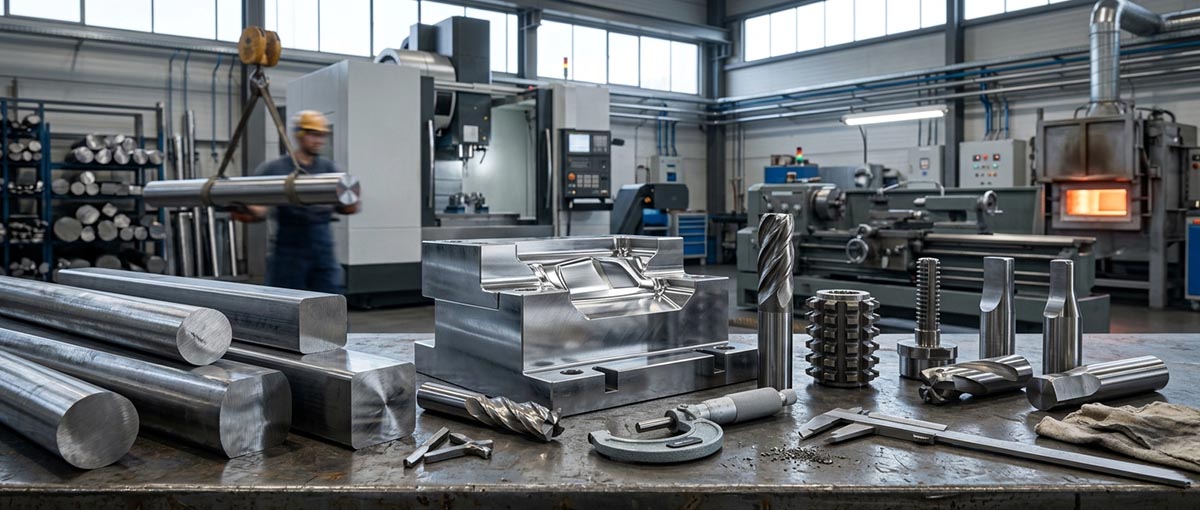
Tool Steel
Tool steels are high-performance special steels developed for manufacturing the tools and dies used in cutting, forming, punching, pressing and moulding operations. Their high hardness, wear resistance, toughness and heat resistance give them long service life under demanding conditions. They include alloy and high-speed steels capable of being hardened and tempered.
Key Properties
- High hardness and strength
- Superior wear resistance
- High resistance to pressure and impact
- Superior mechanical properties that can be enhanced through heat treatment
- Long service life
- Ability to maintain performance at high temperatures
Applications
Tool steels are critically important across many areas of manufacturing:
- Cutting tools
- Turning tools
- Cold-work dies
- Hot-work dies
- Plastic injection moulds
- Sheet-metal forming dies
- Forging and extrusion equipment
Types of Tool Steel
Cold-Work Tool Steels
Used in cutting, punching and cold-forming dies operating at low and medium temperatures. They offer high wear resistance and hardness. These steels are used in applications below 200 °C.
Hot-Work Tool Steels
Preferred for forging, extrusion and pressure die-casting dies operating at high temperatures. Resistant to thermal fatigue and heat checking.
High-Speed Steels (HSS)
Steels that retain their properties at high temperatures, generally used for drilling and cutting/turning tools. Mould steels are the steels used in the moulds of plastic injection machines; their most important property is a flawless surface finish.
Advantages
Tool steels reduce operating costs by providing high precision and long tool life in production. Their resistance to wear, impact and high temperatures increases efficiency in mass-production applications.
Why Tool Steel?
With high performance, precise production, long service life and reliable operation, tool steels are among the indispensable materials of modern manufacturing. They offer maximum durability and efficiency under demanding production conditions.
| TOOL STEELS | |
| 1.2343 (X 37 CrMoV 5-1) | 1.2714 (55 NiCrMoV 7) |
| 1.2344 (X 40 CrMoV 5-1) | 1.2842 (90 MnCrV 8) |
| 1.2367 (X 38 CrMoV 5-3) | 1.2083 (X40 Cr14) |
| 32CrMoV12-10 | |