
Hot Rolled Bars
Products
By Production Method
We're just a phone call away for your steel needs!
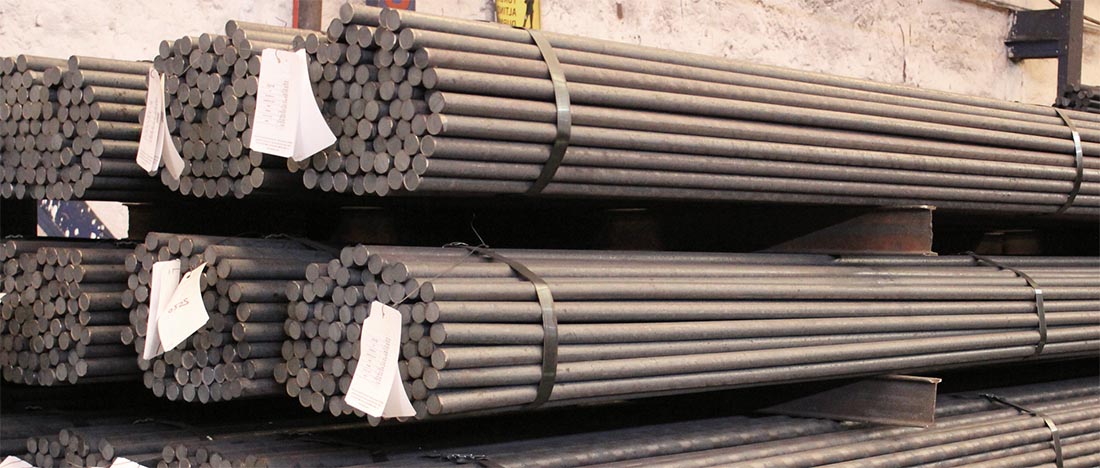
Hot Rolled Bars
Hot rolled bars are semi-finished products made by rolling steel billets (e.g. 160×160 to 200×200) at high temperatures (900–1200 °C) and are widely used across many areas of industry. During production the steel is formed above its recrystallisation temperature to the required diameter and cross-section. This method reduces internal stresses that could form in the material and produces a homogeneous structure.
Hot rolled bars are used extensively in general engineering applications such as machine building, the automotive industry, energy, construction, agriculture, shipbuilding and defence. Available in round, square, hexagonal and special sections, they are a suitable raw material for machining, forging, welding and various mechanical processes.
Manufactured to recognised standards, hot rolled bars offer high strength, good machinability, weldability and cost advantages. With grade options including carbon, alloy and stainless steels, they can meet a wide range of technical requirements.
Chemical analyses, mechanical tests and dimensional checks are performed during quality control to verify compliance with national and international standards. As a result, hot rolled bars are among the key engineering materials providing reliable performance and long service life.
| HOT ROLLED | ||
| FORM | SIZE RANGE | PRODUCTION STANDARDS |
| Round | 12 – 340 mm | EN 10060* |
| Hexagon | 15,5 – 100 mm | EN 10061 |
| Square | 10×10 – 250×250 mm | EN 10059 |
| Flat | 10×3 – 150×60 mm | EN 10058 / 10092 |
| Wide Flat | 160×20 – 500×80 mm | DIN 59200 |
| Wire Rod | 4 – 52mm | EN 1017 |
| * Up to 250 mm | ||